How to Run Aircon Trunking Efficiently — and Invisibly
The decisions you make about aircon trunking will affect how your ceilings look for the next 20 years. Here's how to get them right.
Aircon trunking is one of those renovation topics nobody wants to talk about — until they're living with an ugly white PVC box running across the ceiling of their otherwise beautiful home. In Singapore's climate, air-conditioning isn't optional. But how you route and conceal your trunking is entirely within your control, and it makes an enormous difference to the finished look of your space.
Plan Your Trunking Route Before Everything Else
The single biggest mistake homeowners make is treating aircon trunking as an afterthought — something to figure out after the main design is done. Trunking must be planned at the very beginning, coordinated with your false ceiling design, carpentry layout, and lighting plan. The best time to discuss routing is during your first design consultation, not after your ceiling has been plastered.
- Map all aircon indoor unit positions before finalising ceiling heights
- Confirm with your aircon contractor the minimum bending radius for refrigerant pipes
- Route pipes through the most direct path to the outdoor condenser to minimise bends
Concealment Options: False Ceilings vs Surface Trunking
The cleanest solution is a false ceiling with fully concealed pipes. The trunking is routed inside a plasterboard or calcium silicate ceiling void, completely invisible from below. This adds cost (false ceilings typically run $18–35 per sq ft in Singapore depending on complexity) but transforms the look of your space.
If a full false ceiling isn't in your budget, consider partial concealment — routing trunking within a slim L-shaped cornice or perimeter feature that frames the ceiling without lowering the entire room height. This is particularly effective in lower-ceiling HDB units where a full false ceiling would feel oppressive.
Surface trunking with painted PVC channels is the most affordable option, but requires careful alignment and painting to blend in. Wherever possible, run surface trunking in corners and along wall-ceiling junctions rather than across open ceiling spans.
Multi-Split vs Cassette Units
Ceiling cassette units eliminate trunking visibility almost entirely — the unit sits flush in the ceiling, blowing air in four directions, with only refrigerant pipes routed through the ceiling void. They're increasingly popular in Singapore condos and landed homes where ceiling height allows. The trade-off is higher installation cost and the need for a drop ceiling of at least 250mm.
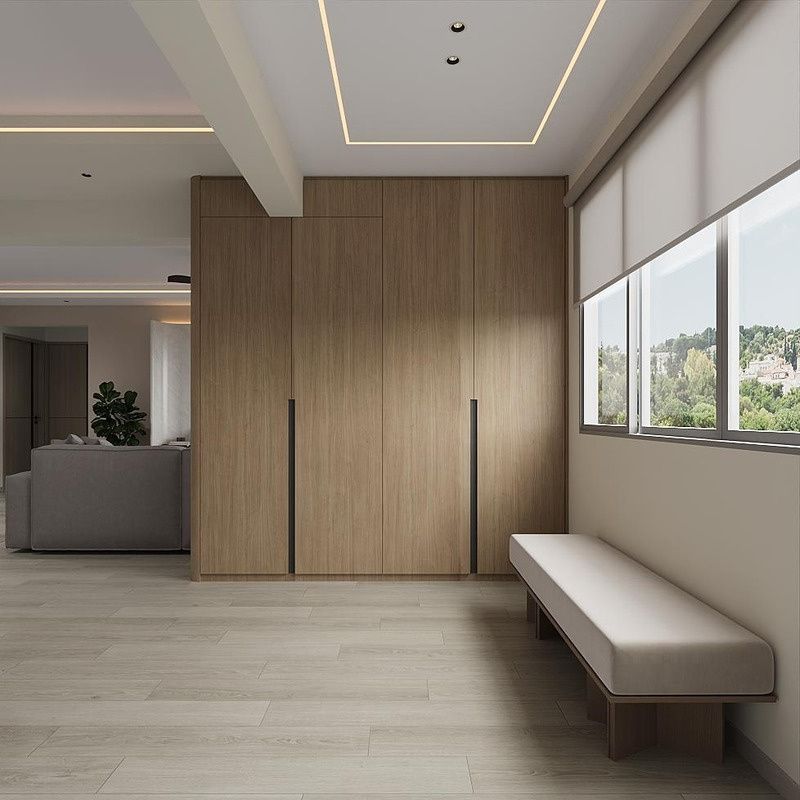
For most HDB flats, wall-mounted split units remain the practical choice. Pair them with a well-planned false ceiling that absorbs the trunking into a deliberate design feature — recessed lighting channels, cove lighting, or ceiling beams.
Maintenance Access — Don't Forget It
Always ensure your contractor installs access panels above concealed trunking and at FCU locations. A beautiful ceiling that requires demolition every time the aircon needs servicing is a false economy. Access panels can be designed to blend seamlessly into the ceiling finish.